

Ironworkers are Raising Mass Timber: A Conversation with Tom Baun, 3 Tree Consulting
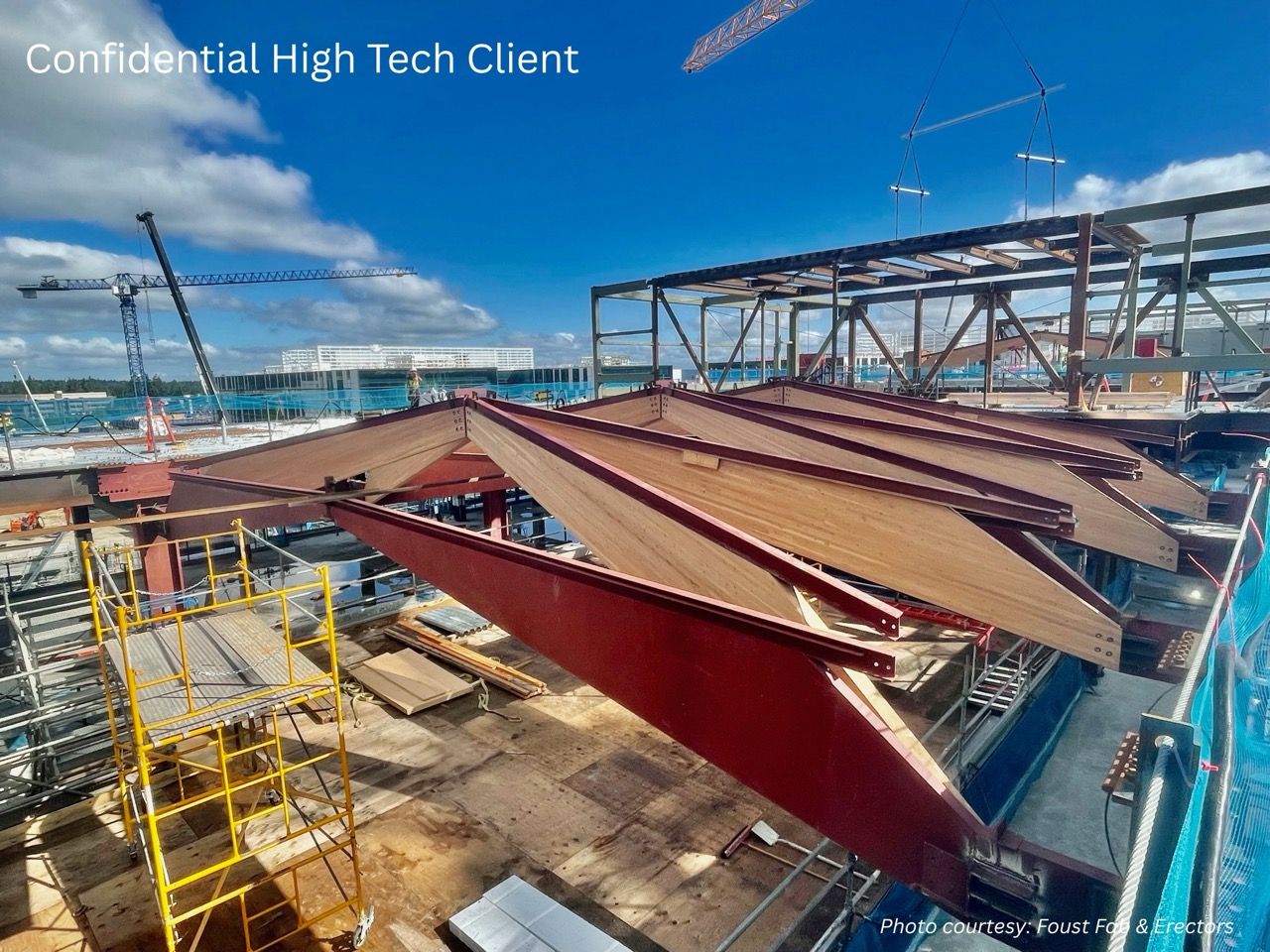
The Ironworkers (IMPACT) have made a meaningful commitment to mass timber, investing in training programs, hybrid mockups, and industry conferences to build the expertise needed for this growing market. On the project side, ironworker crews are already demonstrating what's possible, delivering ahead of schedule and under budget on some of the most high-profile mass timber projects in the country.
Tom Baun spent six years at Vaagen Timbers before launching 3 Tree Consulting, where he now works with IMPACT to expand mass timber erection capacity across the US and internationally. We connected with Tom to hear his perspective on how the ironworkers approach mass timber, and the tremendous potential they bring to scaling the use of mass timber in commercial construction.
MASSTAC: How did you find your way into mass timber, and how did that lead to your work with the Ironworkers?
TOM BAUN: I came from a forestry background and grew up in that world. When I joined Vaagen Timbers, my first week included attending the Mass Timber Conference in Portland. It felt like drinking from five fire hoses, but I quickly realized mass timber could be part of the solution for creating healthier forests for future generations. That became my driving motivation.
My introduction to Ironworkers came through Coby Foust of Foust Fabrication and Erection, a fourth-generation Ironworker who erected my mass timber home, one of the first in the Northwest. He later installed many of Vaagen Timbers’ projects, from small commercial buildings to large technology campuses.
From the start, Coby recognized the natural fit between mass timber and Ironworkers. He leaned into it early and built real momentum. Watching his success showed me what was possible and helped shape the path I’m on today. Across North America, many Ironworker contractors are now seeing that same success as they expand into mass timber.
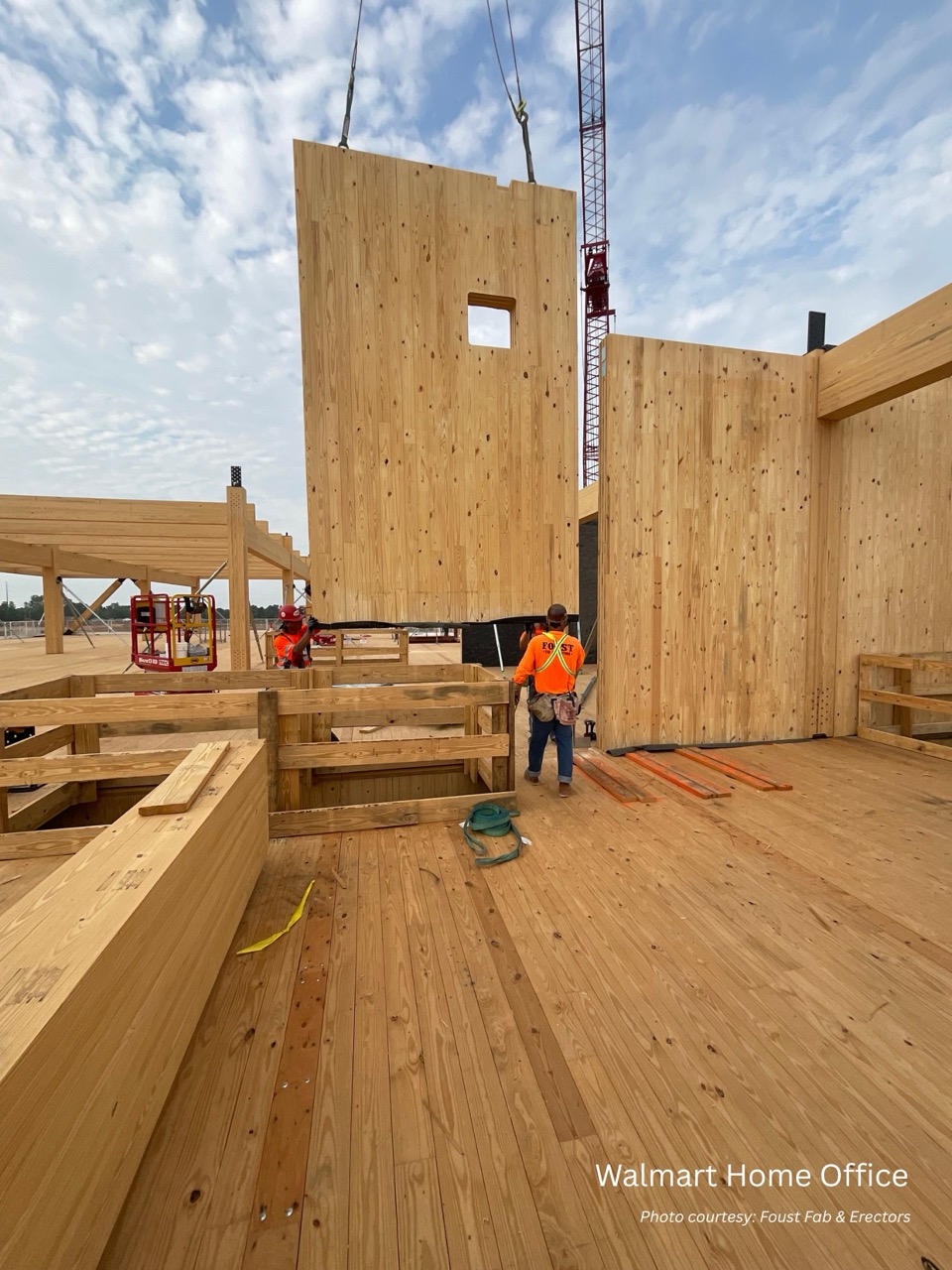
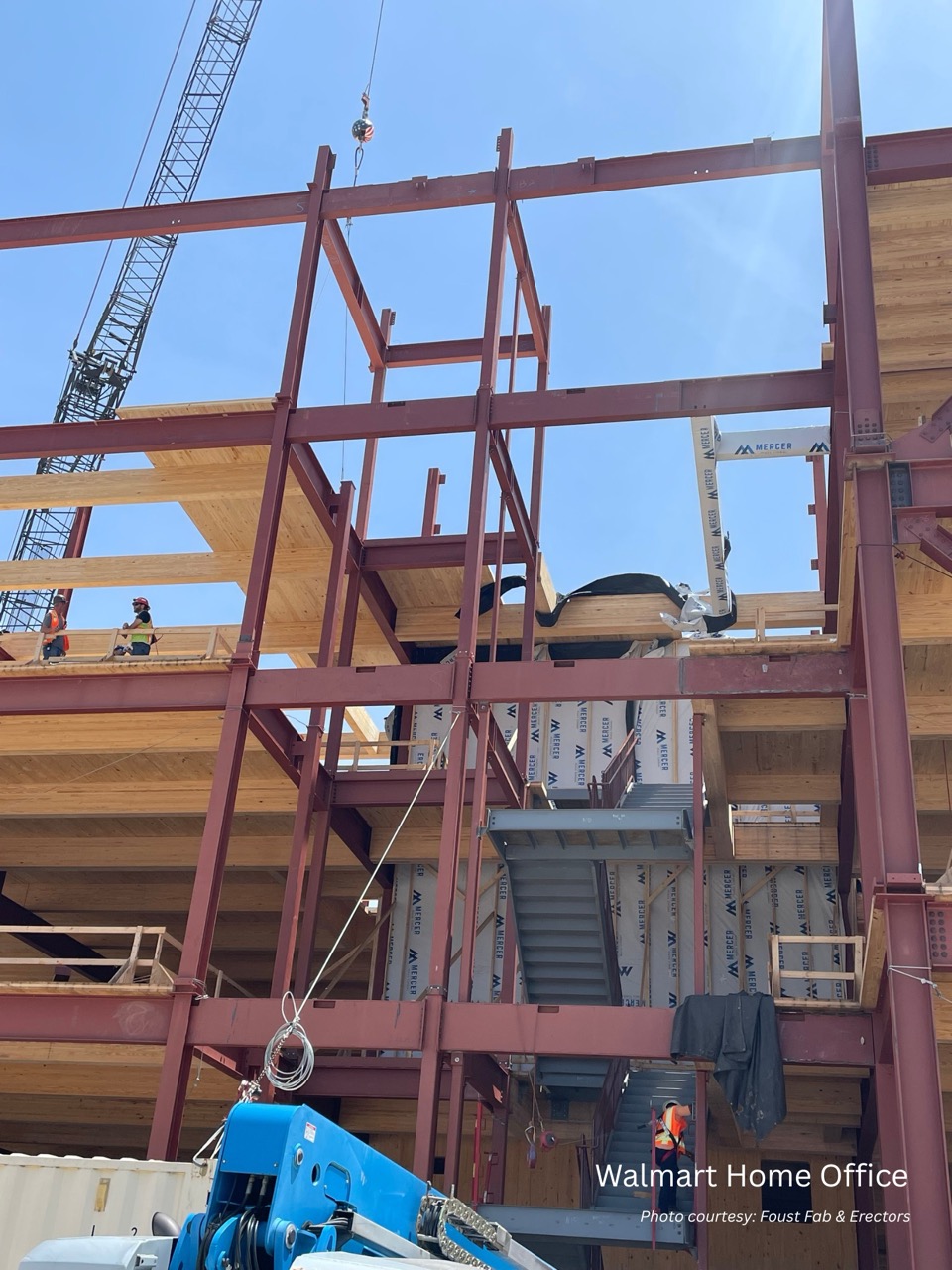
A great example is the Walmart campus project. When the job encountered major challenges, Foust was brought in. Working with a composite crew, his team logged more than 65 consecutive days and helped deliver the project ahead of schedule and under budget. A strong example of what experienced Ironworker-led crews can accomplish on complex hybrid builds.
With Foust Fabrication’s support and in coordination with Vaagen Timbers, I became involved with IMPACT, working within its training and apprenticeship programs. I was later invited to speak at the National IMPACT Conference. The first year brought some skepticism; by the second year, the response had shifted to strong support and enthusiasm. Once we started connecting mass timber growth with Ironworker skill sets and the rise of hybrid construction, the opportunity became clear.
MASSTAC: There is real tension in this industry about who should be installing mass timber on-site. Carpenters have done it, Ironworkers have done it, and both have success stories. What is your perspective on that dynamic?
TOM BAUN: My answer is simple: why are we arguing?
There is plenty of work to go around, and both trades can bring value. The focus should be on matching the right skill set to the demands of the project.
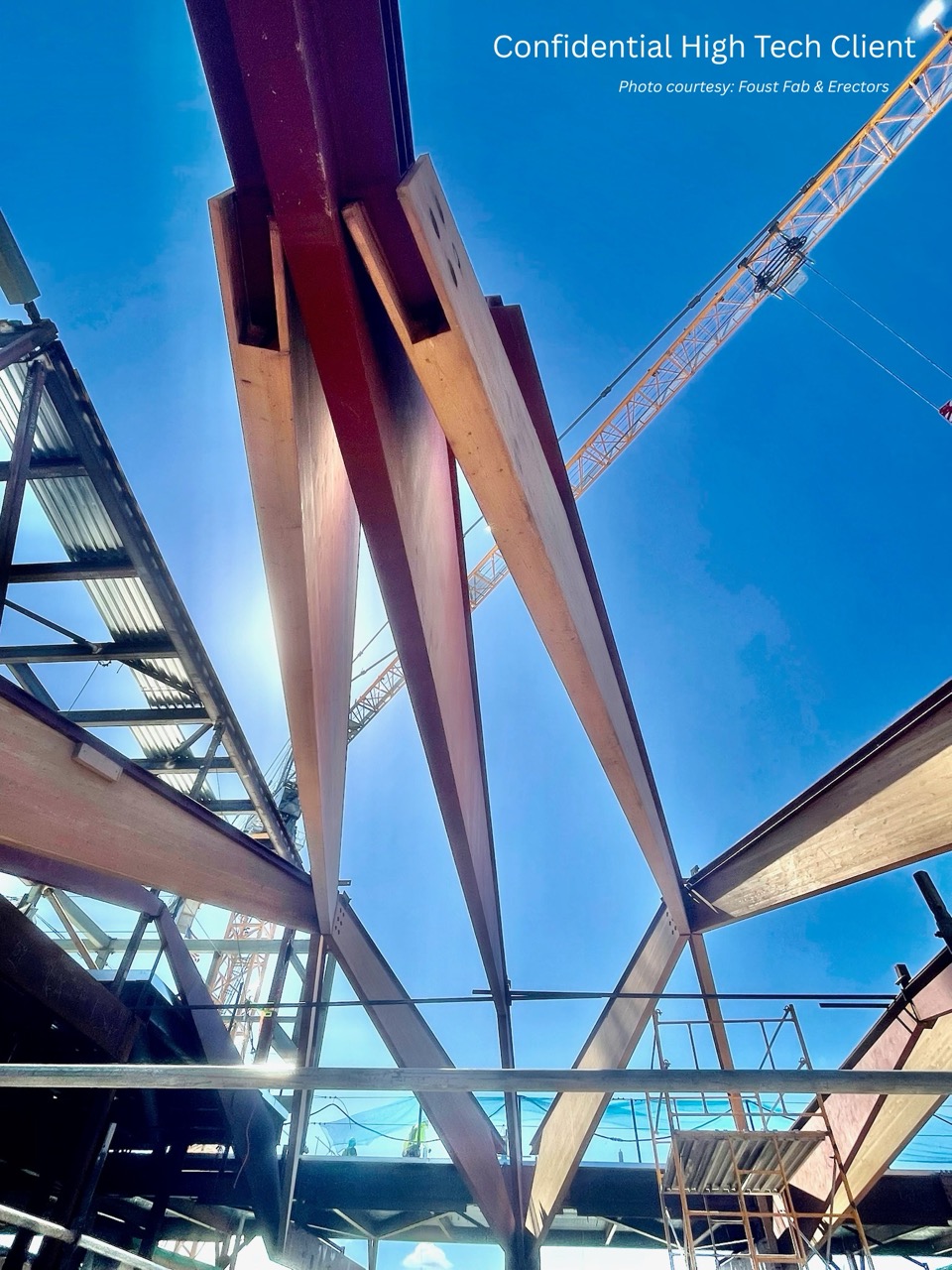
Mass timber, especially at scale, is increasingly being delivered as part of hybrid systems that include structural steel, complex rigging, and heavy crane picks. That’s where Ironworkers bring a distinct advantage. Their experience in structural sequencing, hoisting, and coordinating large, prefabricated components aligns directly with how modern mass timber projects are built.
In Canada, there’s a long-standing model where Ironworkers erect the structural systems for Potash facilities. The carpenters complete the follow-on work like sheathing. That kind of collaboration works because it plays to each trade’s strengths. This has been a successful model since the 1960’s.
The conversation shouldn’t be about jurisdiction, it should be about delivering safe, efficient, high-quality projects.
MASSTAC: What is it about Ironworkers specifically that makes them well-suited to erecting mass timber?
TOM BAUN: Ironworkers have been erecting structural systems since the late 1800s. Rigging, crane work, sequencing, and site coordination are core to the trade and take years to master. While materials evolve, those fundamentals remain the same.
Mass timber is increasingly delivered as large, prefabricated components that require precise handling and installation. That’s directly in line with Ironworker expertise. The transition isn’t a leap, it’s a natural extension of what they already do at a high level.
At the same time, mass timber demands a higher level of care because it’s often an exposed, finished product. That’s where training becomes critical. Through IMPACT, Ironworkers have leaned into that learning curve, advancing from basic awareness to detailed discussions around tolerances, connections, and sequencing.
That combination of deep structural experience plus a commitment to evolving with the material is what makes Ironworkers especially effective in this space.
MASSTAC: One of the most common concerns is that there aren’t enough qualified erectors to install all the mass timber being designed. How do you see Ironworker involvement affecting that?
TOM BAUN: This is where the opportunity is significant and critical for the success of mass timber projects.
Right now, capacity is one of the biggest constraints in the market. Many experienced installers are stretched thin, and that can slow project timelines or drive-up costs.
There are more than 4,000 signatory Ironworker contractors across North America. As more of them incorporate mass timber into their capabilities, it meaningfully expands the available workforce for installation.
We’re already seeing that shift. What started in the Pacific Northwest is now gaining momentum across the country. Boston, New York, Massachusetts, and beyond. Coast to coast. As awareness grows, so does participation.
Most of these projects are hybrid by nature. Increasing Ironworker involvement helps meet that demand while maintaining the structural efficiency these projects require.
MASSTAC: You’ve been pushing for AISC to get involved in standardizing mass timber. What would that mean for the industry, and where does that effort stand?
TOM BAUN: Standardization is one of the biggest opportunities for improvement in mass timber.
In structural steel, there’s a high level of consistency. The details are widely understood, which makes design, fabrication, and installation more predictable. Mass timber doesn’t yet have that same level of standardization, and it can create unnecessary complexity.
Organizations like AISC have the framework and experience to help bring consistency to hybrid construction, including mass timber. That would benefit the entire industry. The designers, manufacturers, and installers alike.
Momentum is building. More stakeholders recognize that hybrid construction is the future, and that standardization will help unlock its full potential. At the end of the day, everyone in the field is focused on the same goal: building projects safely, efficiently, and successfully.
───────
We invite you to connect with Tom Baun to learn more about how the Ironworkers might be able to support your mass timber projects.