This curated selection of resources is a starter library designed to support school districts and their project teams in the successful delivery of a mass timber project. To round out these existing resources, our mass timber schools committee is in the process of developing additional materials to support districts with the planning, design, procurement, construction, and operation of a mass timber facility. We will publish these resources as they are ready. In the meantime, please reach out to us with your questions. We love to help!

This report summarizes acoustic testing at the Washington School for the Deaf and Hard of Hearing (WSD) conducted by LSTN Consultants (Denis Blount and Leah Guszkowski) on Thursday, January 2, 2025. The testing measured the in-situ acoustic performance of various mass timber floor-ceiling assemblies throughout the campus’ newly completed facilities.

Provides information on incorporating mass timber in educational facilities and includes relevant case studies.

The Mass Timber Insurance Playbook – U.S. Edition (MTIP) gives developers, design/construction professionals, and insurers a comprehensive framework for working together to resolve challenges that impact the insurability of mass timber buildings

Highlights the use of mass timber construction in K-12 educational facilities and provides insight into benefits of mass timber including its cost-competitiveness, spatial efficiency and flexibility, and sustainability advantage.
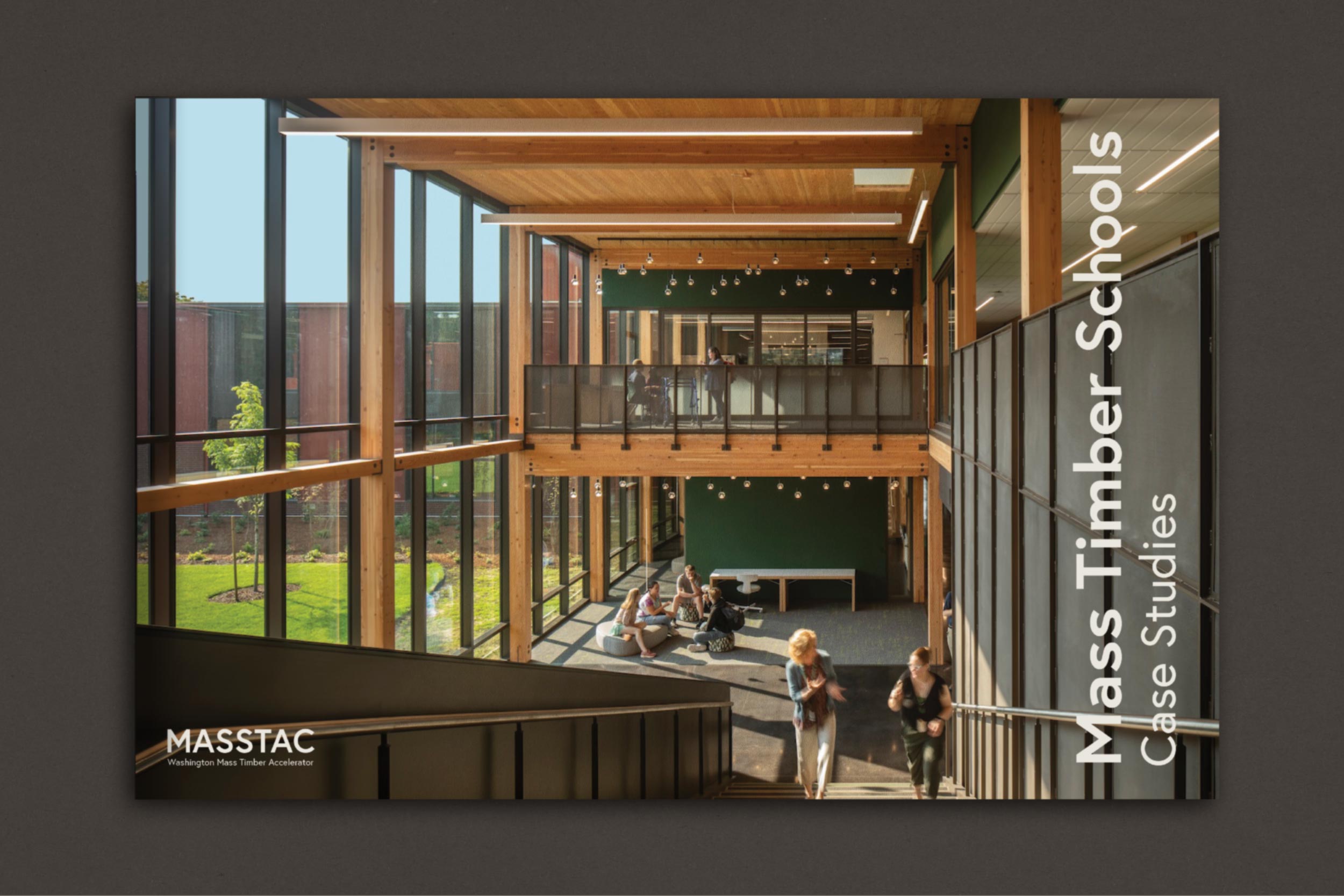
Developed with the Mass Timber Schools Committee, this book features a selection of mass timber schools in construction and in design throughout the Pacific Northwest.
The report summarizes the findings from Phase 1 of the Mass Timber Schools Accelerator project, funded by the USDA Forest Service Wood Innovations Grant program.

The Nature of Wood explores the science of having a ‘biophilic’ response to wood, sheds light on topics in need of more in-depth research, and highlights a few perspectives on how to think of wood in terms of optimizing design for the user experience.

Studies the possibilities in multi-story mass timber construction for K-12 schools in Washington to support the demand for additional learning spaces that are adaptable to changing educational needs, are financially viable, and promote resilience.
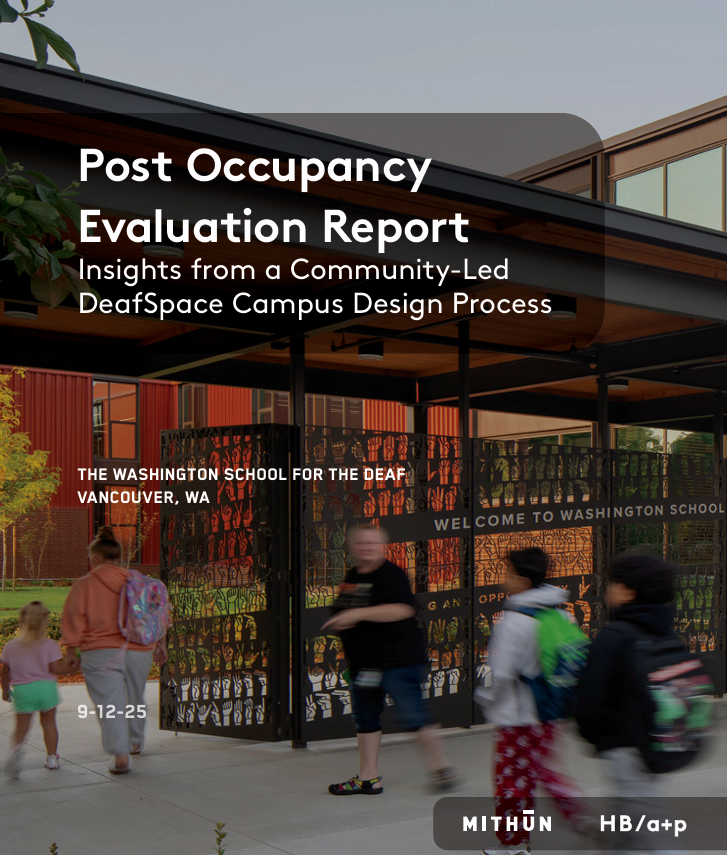
When asked “What is your favorite element of the new building, 80% of Staff listed “Wood Structure” as #1, Love it!

Commissioned by Forestry Innovation Investment, a Crown agency responsible for promoting the BC forest industry, the report is intended to be a resource for school districts, administrators, and design professionals curious about the use of wood in school design and construction.
